

Young and invincible
When you are young, your frontal lobe is not fully developed yet. That is the part of the brain responsible for risk assessment, impulse control, and thinking about the long term. The result? You are strong, bold, looking for adventure — and wearing earplugs simply is not cool.
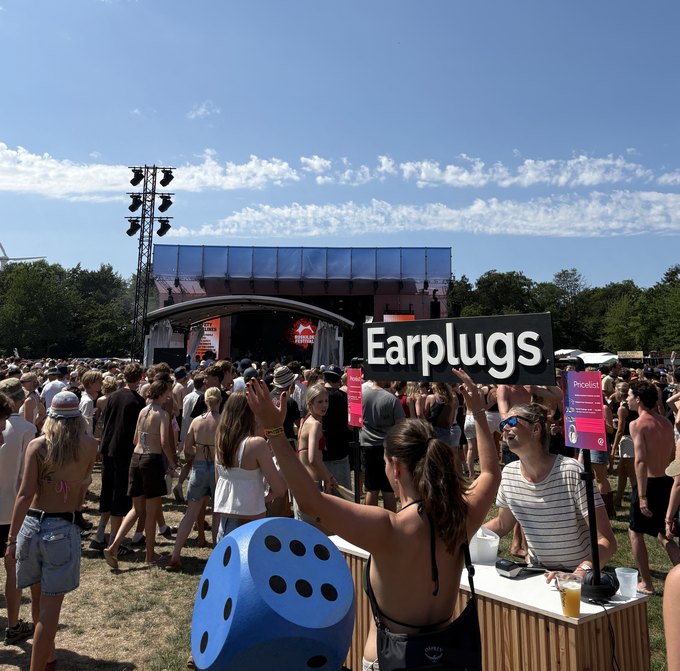
But that is exactly the period when you face the greatest risk of serious hearing damage. Not only at festivals or in the nightclub, but also on a motorcycle, while playing sports, or just from playing music too loud in your ears. The treacherous part is that the damage often only becomes noticeable years later. Hearing wears down slowly, almost inaudibly — until at forty you notice you can no longer understand people in crowded rooms.
Hearing damage is irreversible. You cannot undo it.
The most promising window to make young people aware of hearing damage lies between ages 11 and 15. That is when the peer group is still forming, norms are still being shaped, and behavior can still be influenced. After that period, the social environment is largely fixed — and if no one in the friend group wears earplugs, the barrier to start is enormous. Anyone who tries risks being laughed at. For a teenager, that is often enough to drop the idea.
After that, behavior usually only changes when it is too late. In practice, people only really start wearing earplugs when they have experienced someone with serious hearing damage in their immediate circle. A friend with tinnitus. A colleague who is nearly deaf. A family member who keeps turning the TV up louder. Those moments hit home — and prompt action. A shame, because it could have been prevented.
Getting older and the realization that sound seems louder
Are you a bit older and noticing that the sound at festivals, in restaurants, or in the car seems to be getting louder? You are not alone. But it is a misconception to think sound levels have actually risen over the years.
The reality is different: as we age, our ears become more sensitive. The system has earned its scars and simply cannot take as much. We feel the power of sound differently — and begin to realize we can no longer just surrender to it.
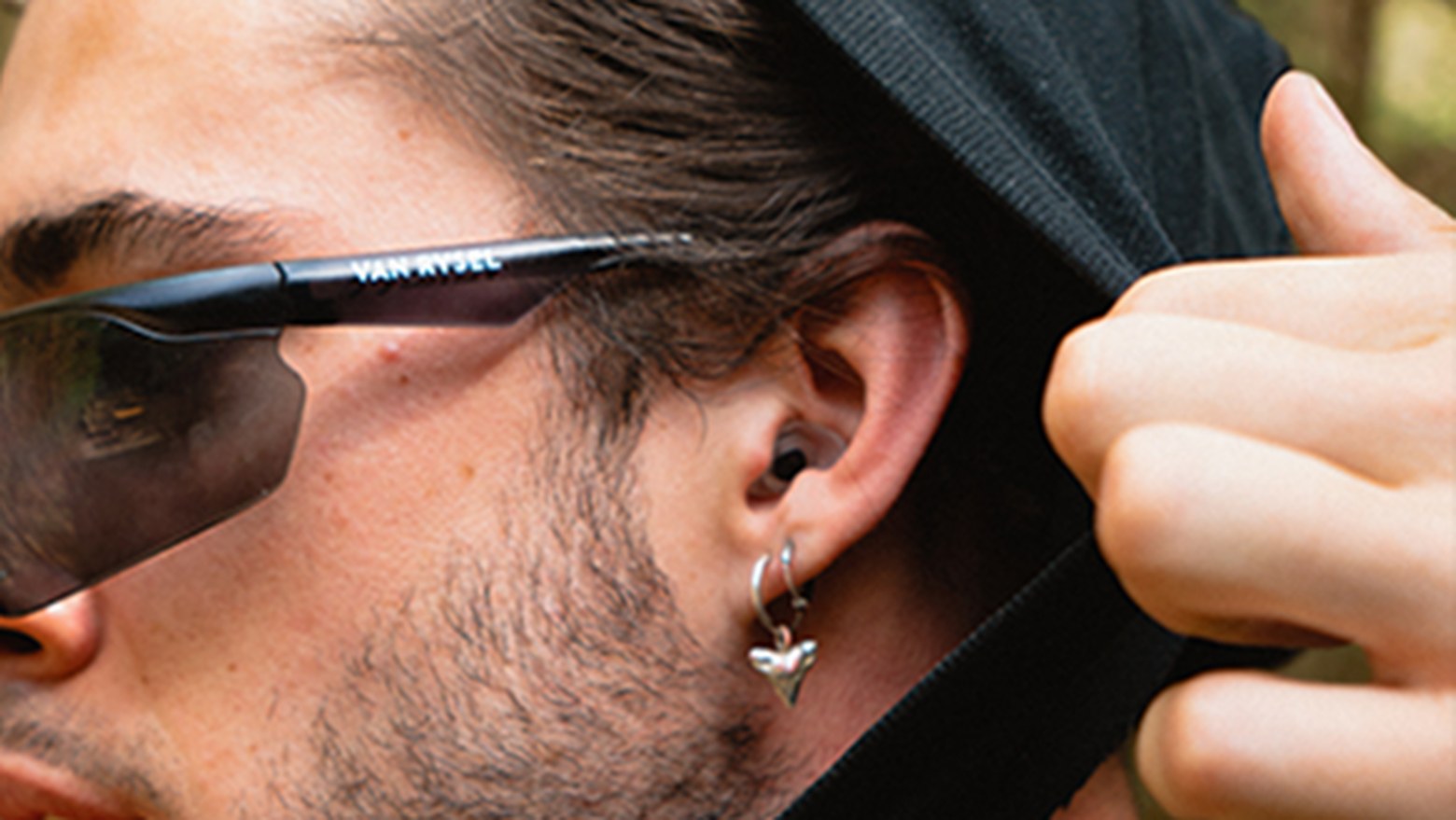
With earplugs, you can. No one says sunglasses make life less beautiful — on the contrary, you see more sharply, stay outside longer, enjoy more. Earplugs work exactly the same way. You are in control, the sound does not overwhelm you, and you experience the concert, the motorcycle ride, or the storm on the beach to the fullest — on your terms. It makes your world more manageable.
The right size, the right attenuation — and you will not want to be without them
The secret of good earplugs lies in two things: the right size and the right attenuation. When those two are well-matched, everything changes. No feeling of cotton in your ears, no missing the music.
On the contrary — music sounds purer. Conversations become clearer. And your ears arrive rested at the end of the evening.
It does take time. The brain has to build up a new reference — a new way of listening. That is a process of acceptance. Flat, linear attenuation makes it easier, because the brain does not have to compensate for large gaps in the frequency spectrum. Still, it remains personal: every person has their own hearing curve, their own unique way of hearing. And the hearing threshold plays a role too — how sensitive someone is to soft or loud sound differs per person. What is comfortable for one can be too much or too little for another.
That is exactly why custom fit and the right filter choice are so important.
People who have once found the right earplugs really do not want to be without them. Not at the festival, not on the motorcycle, not during a strong wind on the beach. Because the ears — and the system behind them — are among the most sensitive and valuable sensors we have in daily life.
Take good care of them. At every age.
Share:
Should You Keep Your Earplugs In All Night? The Truth About Taking Them Out Mid-Concert
Why every festival should offer earplugs, and how to do it well